Counting Sats, Not Dollars: The Measurement Problem Costing American Bitcoin Investors Real Gains

There is a quiet cognitive trap embedded in the way most Americans engage with Bitcoin. Open any financial app, check any exchange, and the first number you see is a dollar figure. Bitcoin at $62,000. Bitcoin down 4.3%. Bitcoin recovering toward its all-time high. Every data point is filtered through the lens of the US dollar—a currency that, by design, loses purchasing power over time. This framing is not neutral. It is, in many respects, the single most effective mechanism through which retail investors consistently misread the market.
The investors who have accumulated the most Bitcoin over the past decade did not do so by watching dollar charts. They counted satoshis.
What a Satoshi Actually Represents
One Bitcoin is divisible into 100,000,000 units called satoshis, named after the pseudonymous creator of the protocol. At current prices, a single satoshi is worth a fraction of a cent—an amount so small it seems almost irrelevant to the average American investor. That perception is precisely the problem.
When you measure your Bitcoin holdings in satoshis rather than dollars, the entire psychological framework of your investment shifts. Instead of asking "how much is my Bitcoin worth today," you begin asking "how many satoshis do I control." These are fundamentally different questions, and they lead to fundamentally different behavior.
The dollar-denominated question is reactive. It responds to price. It causes investors to feel wealthy when Bitcoin is at $70,000 and anxious when it falls to $45,000—even if their satoshi count has not changed by a single unit. The satoshi-denominated question is structural. It focuses on accumulation, on the fixed supply of 21 million Bitcoin, and on the long-term purchasing power trajectory of the asset relative to an inflationary monetary system.
How Dollar Thinking Creates Exploitable Predictability
Institutional participants and large holders—commonly referred to as whales—understand that the majority of retail investors in the United States anchor their decisions to dollar price. This predictability is not incidental. It is strategically useful.
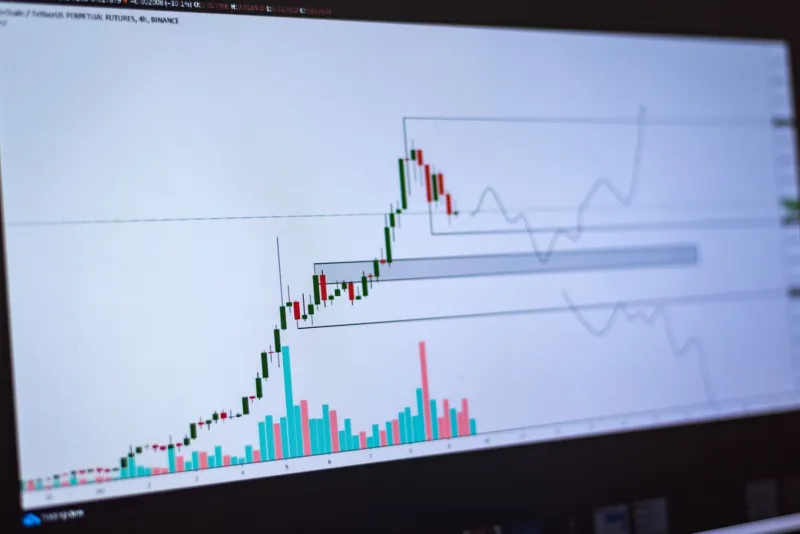
Consider what happens during a prolonged price decline. A retail investor watching their $10,000 Bitcoin position drop to $7,200 experiences loss in dollar terms. The psychological pressure mounts. The position feels like a liability. Selling becomes emotionally rational, even when it is strategically counterproductive.
Meanwhile, a whale operating in satoshi terms observes the same price action as an opportunity to acquire more units at a discount. The dollar price is irrelevant to their calculation. What matters is that the supply of Bitcoin is fixed, the number of satoshis they hold is increasing, and the relative cost of each satoshi has declined.
On-chain analytics platforms regularly document this divergence. During periods of significant price drawdown, exchange outflows—Bitcoin moving off trading platforms into cold storage—frequently accelerate. This is the behavioral signature of accumulation. Large holders are not selling their positions in dollar panic; they are withdrawing Bitcoin to secure custody, increasing their satoshi stack while retail capitulates.
The dollar-focused American investor sees a price chart falling and interprets it as a signal to reduce exposure. The satoshi-focused institutional actor sees the same chart and interprets it as a discount window.
The Accumulation Signal Most Retail Investors Ignore
One of the more revealing on-chain metrics for identifying genuine accumulation versus speculative noise is the behavior of addresses holding relatively small but consistent Bitcoin amounts. When the number of addresses holding between 0.1 and 1 Bitcoin increases steadily during a price downturn, it suggests that retail participants with a satoshi mindset—those who are deliberately building their stack regardless of dollar price—are actively buying.
Conversely, when exchange inflows spike and the number of small-balance addresses decreases during the same period, it indicates that dollar-denominated retail investors are liquidating. They are handing their satoshis to buyers who are less concerned with today's price and more focused on long-term unit accumulation.
This divergence is not theoretical. It has appeared with notable consistency ahead of several major Bitcoin price recoveries. The investors who held or increased their satoshi positions during these windows captured the subsequent appreciation. Those who exited based on dollar-denominated anxiety did not.
Redenominating Your Mental Model
Shifting to satoshi-denominated thinking does not require ignoring dollar prices entirely. It requires placing them in the correct context. The dollar price of Bitcoin is useful for understanding current purchasing power and for making tax-relevant calculations—a topic with significant implications for American investors given IRS reporting requirements. But it is a poor primary signal for evaluating whether an investment thesis remains intact.
A more productive framework involves tracking three things simultaneously: your satoshi count, the rate at which you are adding to that count over time, and the on-chain behavior of large holders relative to price movements.
When your satoshi count is growing and on-chain data suggests institutional accumulation, the dollar price decline is contextually different than it appears on a standard chart. It is not evidence that Bitcoin is failing. It is evidence that the market is in a redistribution phase—one that historically precedes significant upward price movement.
Several tools are available to American investors for this type of analysis. Blockchain explorers, on-chain analytics dashboards, and exchange flow monitors all provide data that, when interpreted through a satoshi lens rather than a dollar lens, tell a more complete story about market structure.
The Supply Constraint That Dollar Thinking Obscures
There is a broader macroeconomic dimension to this redenomination that deserves direct attention. The US dollar is subject to ongoing monetary expansion. The Federal Reserve's balance sheet, the national debt trajectory, and the structural dynamics of dollar issuance all point in one direction: more dollars over time. Bitcoin's supply, by contrast, is mathematically fixed and programmatically enforced.
When you measure Bitcoin in dollars, you are measuring a fixed asset against an expanding yardstick. A Bitcoin price of $60,000 today and $60,000 in three years would appear flat on a dollar chart. But if the dollar's purchasing power has declined 15 percent over that period, the Bitcoin position has actually appreciated in real terms. Satoshi-denominated thinking forces this distinction into view. Dollar-denominated thinking obscures it entirely.
For American investors navigating an inflationary monetary environment, this distinction is not academic. It has direct implications for how portfolio performance should be evaluated, how accumulation targets should be set, and how market downturns should be interpreted.
Practical Application for the Retail Investor
The satoshi framework is not a rejection of analytical rigor—it is an enhancement of it. Begin by calculating your current satoshi holdings and establishing a target accumulation rate. Rather than setting a dollar-value goal ("I want my Bitcoin to be worth $50,000"), set a satoshi goal ("I want to hold 1,000,000 satoshis—0.01 BTC—by the end of the year"). This reframes every purchase decision around unit acquisition rather than dollar exposure.
Next, begin monitoring on-chain accumulation metrics alongside price. When large holders are quietly adding satoshis during a price decline, that is a signal worth weighting heavily. When exchange inflows spike and retail appears to be liquidating, that is context for your own decision-making.
The investors who have consistently outperformed in Bitcoin markets are not those who predicted price movements with precision. They are those who accumulated the most satoshis at the lowest average cost—and who did so by refusing to let dollar-denominated psychology dictate their behavior during the moments that mattered most.